The numbers · 3 min read
Savings rate: the number that sets how soon you are free
Your savings rate, not your salary, decides how many years you need. A table from 10% to 80% shows 66 years at the low end and 6 at the high end.
Education, not financial advice. Use at your own risk. Read the full disclaimer
In short
- Starting from zero, saving 10% of net income takes about 66 years to reach independence, 50% takes about 20 and 70% about 10.
- The first points of savings rate matter most: going from 10% to 20% saves 20 years, going from 60% to 70% saves 4.5.
- Cutting spending counts twice, because it raises what you save and lowers the pot you need.
Your savings rate is the share of your net income that you do not spend. It is the single best predictor of how soon you can stop working, and it matters more than your salary. A high earner who spends everything stays on the treadmill. A modest earner who saves half gets off it.
Why one number does so much
The savings rate works on both sides of the equation. Money you save goes into the pot. Money you do not spend also reduces the size of the pot you need, because your retirement spending is lower. One decision moves both numbers.
Years to independence, from zero
The table assumes you start with nothing, earn a 3.5% real return after fees, and can withdraw 3.5% a year. It ignores pensions and taxes, so it is a first read, not a forecast.
| Savings rate | Years to independence |
|---|---|
| 10% | 66.5 |
| 20% | 46.4 |
| 30% | 34.7 |
| 40% | 26.4 |
| 50% | 19.9 |
| 60% | 14.7 |
| 70% | 10.2 |
| 80% | 6.4 |
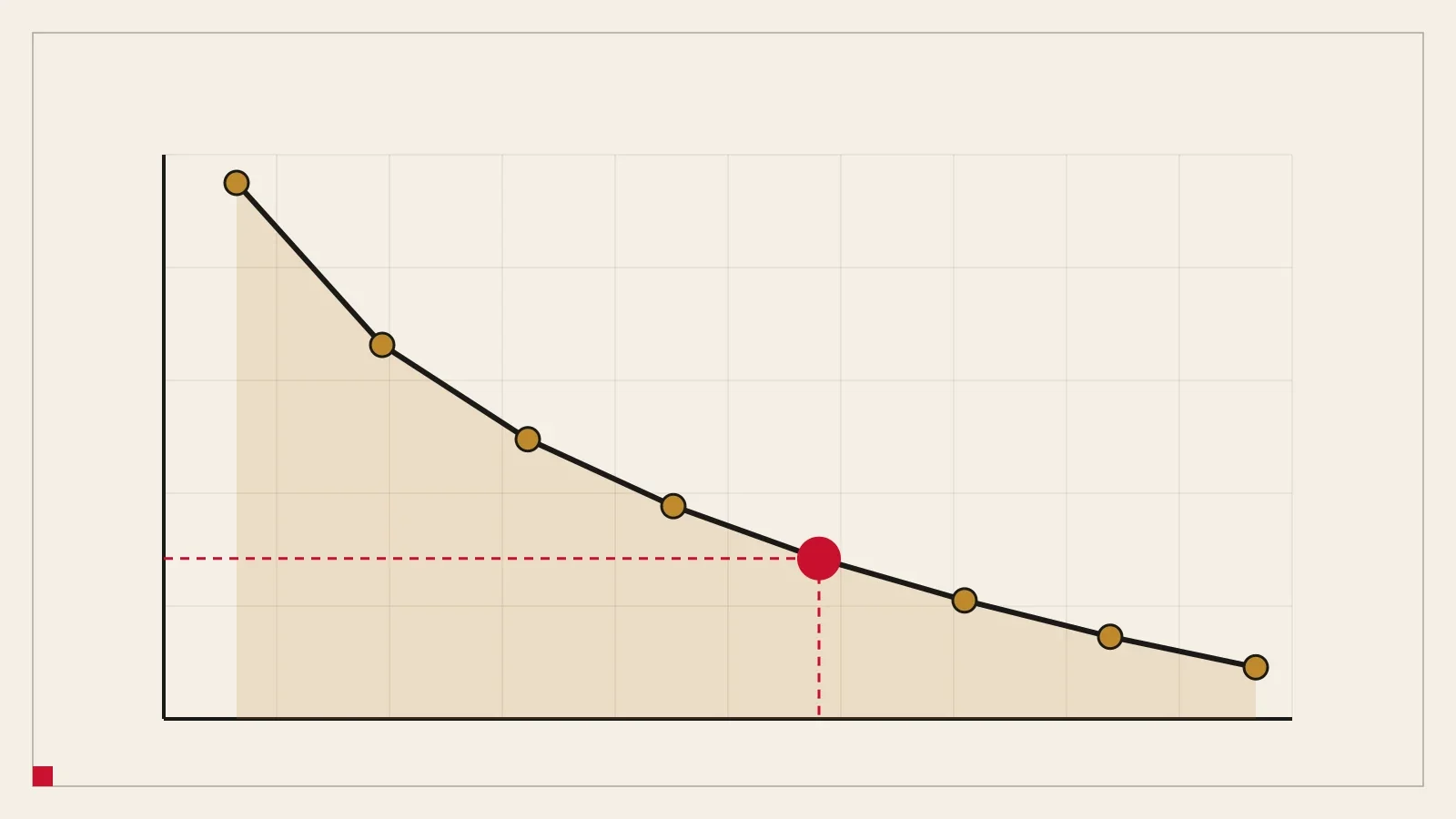
Two things stand out. First, the curve is steep at the left: moving from 10% to 20% saves 20 years, while moving from 60% to 70% saves 4.5. Second, nobody gets there fast at 10%. Raising a very low savings rate is the best first project.
With Swiss pensions and a head start
Real plans are shorter, because you start with some savings and the pension fund and AHV share the load later. Here is the same person in the calculator: 30 years old, spending CHF 4,000 a month, CHF 20,000 saved, using the default assumptions.
| Saves per month | Independent at age |
|---|---|
| CHF 1,000 | 56.8 |
| CHF 1,500 | 53.5 |
| CHF 2,000 | 50.9 |
| CHF 2,500 | 48.8 |
| CHF 3,000 | 47.2 |
Each extra CHF 500 a month buys roughly 1.5 to 3.5 years. Taxes are simplified in these figures. Use them to see the shape, then run your own.
How to raise the rate
- Pay yourself first. A standing order on payday, before you can spend it.
- Attack the big fixed costs. Rent, health insurance and transport usually decide the rate. See you need less than you think.
- Save raises, not just income. When your pay rises, send at least half of the increase to the pot.
- Keep costs low once invested. Fees quietly cut your return. See investing in Switzerland: ETFs, domicile and fees.
Next step
Try it in the calculator with your own income and spending. For the target the rate leads to, read your FIRE number.
Try it with your numbers
Move the savings slider in the calculator and watch your independence date change.
Starts with
- Age 30
- Spend CHF 4’000 / month
- Save CHF 2’500 / month
- Saved CHF 20’000
- Net income CHF 6’500 / month
Free and private. Your numbers stay on your device. Estimates for planning, not advice. Use at your own risk.
Keep reading
The numbers
Your FIRE number: how much is enough in Switzerland?
Multiply yearly spending by 25 to 30 for a first answer, then adjust for AHV, pension fund and Pillar 3a. A table in francs and the Swiss twist.
Mindset
You need less than you think: the case for a smaller number
Cutting CHF 1,000 from monthly spending can move your independence date by years. Where the money really goes and how to cut without feeling poorer.
Investing
Investing in Switzerland: broad ETFs, domicile and fees
A plain guide to a low-cost portfolio from Switzerland: why broad index funds, how fund domicile affects withholding tax and what fees do over 30 years.
FIRE basics
What is FIRE, and does it work in Switzerland?
FIRE means building a pot that covers your spending so work becomes optional. Here is how it works in Switzerland, where it helps and where it gets harder.