Housing · 3 min read
Buy or rent abroad? Comparing with staying in Switzerland
Buying a home abroad ties up capital in one place and one currency. How to compare buying, renting abroad and staying in Switzerland, and the hidden costs.
Education, not financial advice. Use at your own risk. Read the full disclaimer
In short
- Buying abroad ties your capital to one place and one currency, and transaction costs of roughly 7% to 13% are lost the day you buy.
- In a CHF 250,000 example, owning costs about CHF 13,375 a year once the return on the money is counted, against CHF 12,000 for renting.
- Rent for a year or two before you buy anywhere, and keep enough liquid money for the years before your pensions start.
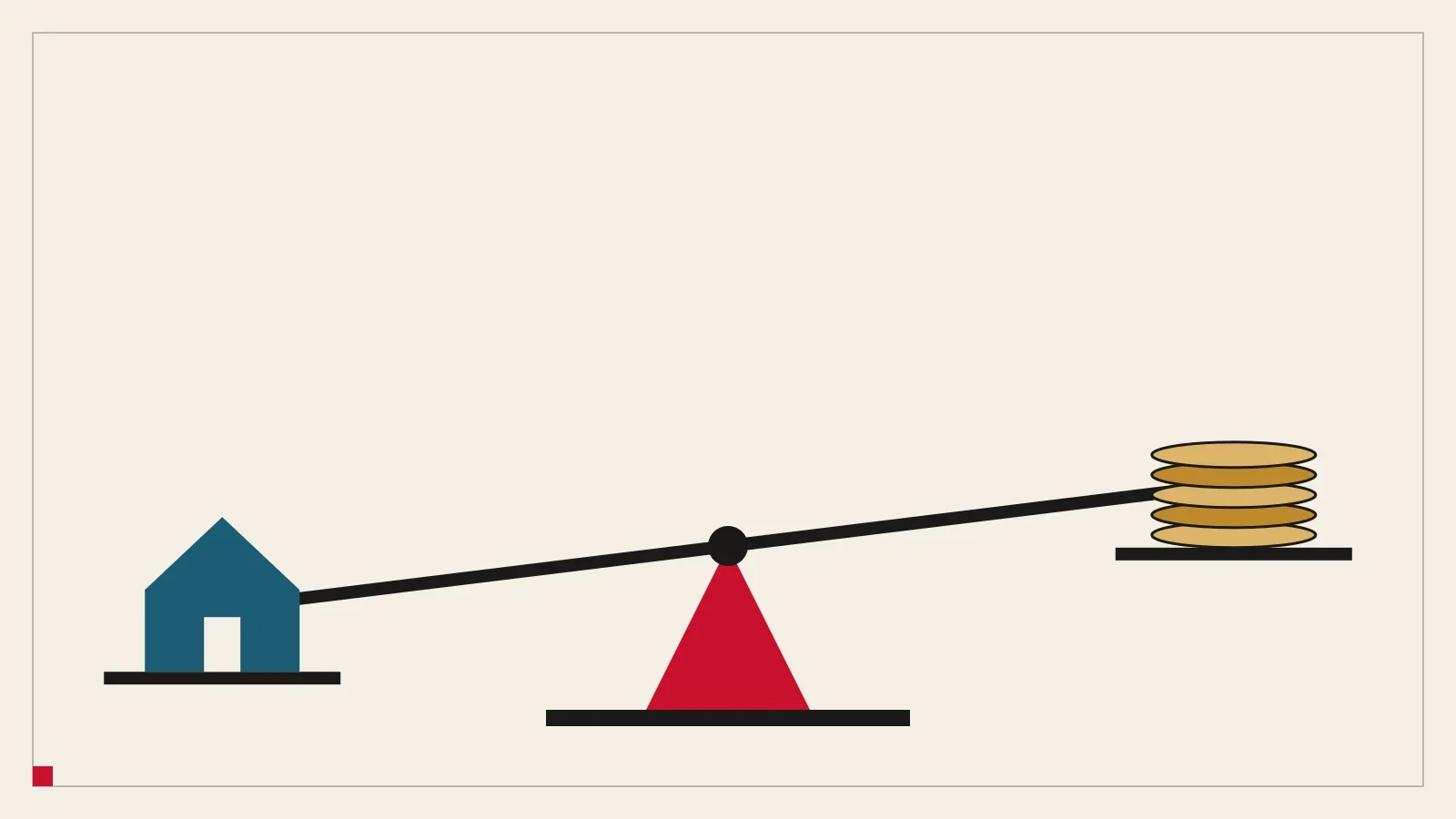
Once you have decided to look at living abroad, the next question comes quickly: should I buy a place? A home abroad feels like stability. It can also tie up the money you need and bind you to a country you have not yet tested for a full year.
Three options
- Stay in Switzerland. Rent or own, at Swiss prices.
- Rent abroad. Lower costs, full flexibility, no capital at risk.
- Buy abroad. Lowest running costs, largest upfront cash, least flexibility.
| Option | Upfront cash | Monthly cost | Flexibility | Main risk |
|---|---|---|---|---|
| Rent in Switzerland | Low | High | High | Rent increases |
| Rent abroad | Low | Low | High | Rent increases, visa rules |
| Buy abroad | High | Very low | Low | Illiquid, currency, resale |
The costs people forget
- Buying costs. Transfer taxes, notary and agent fees often add up to about 7% to 13% of the price, depending on the country and the type of property. They are gone the day you buy.
- Running costs. Property tax, community fees, insurance and repairs, often 1% to 2% of the value a year.
- Currency. The price is in euros or baht, your pot in francs.
- Selling. It can take months or years, and the price may be lower than you hoped.
- Local rules. Some countries limit what foreigners can own. See retiring in Thailand.
- Taxes. Non-residents and residents are taxed differently on property income and on gains. Check before you buy.
A worked example
A CHF 250,000 flat in a cheap market, against renting a similar one for CHF 1,000 a month.
Example Buying costs about 10% of the price, so you need CHF 275,000 in total. Running costs are 1.5% of CHF 250,000, which is CHF 3,750 a year. The CHF 275,000 could have earned 3.5%, or CHF 9,625. Owning therefore costs CHF 13,375 a year. Renting costs CHF 12,000.
So even where houses are cheap, renting can match or beat owning once you count what the money could earn, and it keeps your capital free. This is an illustration with assumed numbers.
When buying can make sense
- You know you will stay, because you have already lived there for a year or more.
- You do not need the capital for your bridge years before the pensions start. See the three pillars.
- You have taken local legal and tax advice.
- You can afford a loss on resale.
When to rent
Almost always at first. Rent for a year or two, in different seasons, before you commit. A flexible rent also keeps your capital invested, and you can spend it down over time. That is the idea in rent for life, die with zero.
For the same question at home, read rent or buy in Switzerland. For the options by country, see Portugal, Spain, southern France or Italy.
Next step
Open the calculator and compare a rent-abroad budget with your Swiss one.
Try it with your numbers
Compare a rent-abroad budget with your Swiss one in the calculator.
Starts with
- Age 50
- Spend CHF 3’000 / month
- Save CHF 2’000 / month
- Saved CHF 700’000
- Retire at 58
Free and private. Your numbers stay on your device. Estimates for planning, not advice. Use at your own risk.
Keep reading
Housing
Rent or buy if you want to retire early in Switzerland
Owning a home can lower your retirement spending or lock up the money you need. How to compare, with a worked example for a CHF 1.2 million flat.
Retire abroad
Portugal, Spain, France or Italy: a Swiss retiree’s comparison
Four southern European options compared for an early retiree from Switzerland: visas, tax approach, healthcare and budget in francs. Facts to check.
Retire abroad
Retiring in Thailand from Switzerland: budget, visa and risks
Thailand can cut your monthly budget to about CHF 1,800. What the retirement visa asks for, how foreign income is taxed and the risks that matter at 70.
Mindset
Rent for life, die with zero: spending your money on purpose
Most savers end life with far more than they needed. Why a plan that spends down on purpose can pay for more living, and the risks that stop you going to zero.